MarcosOliveira

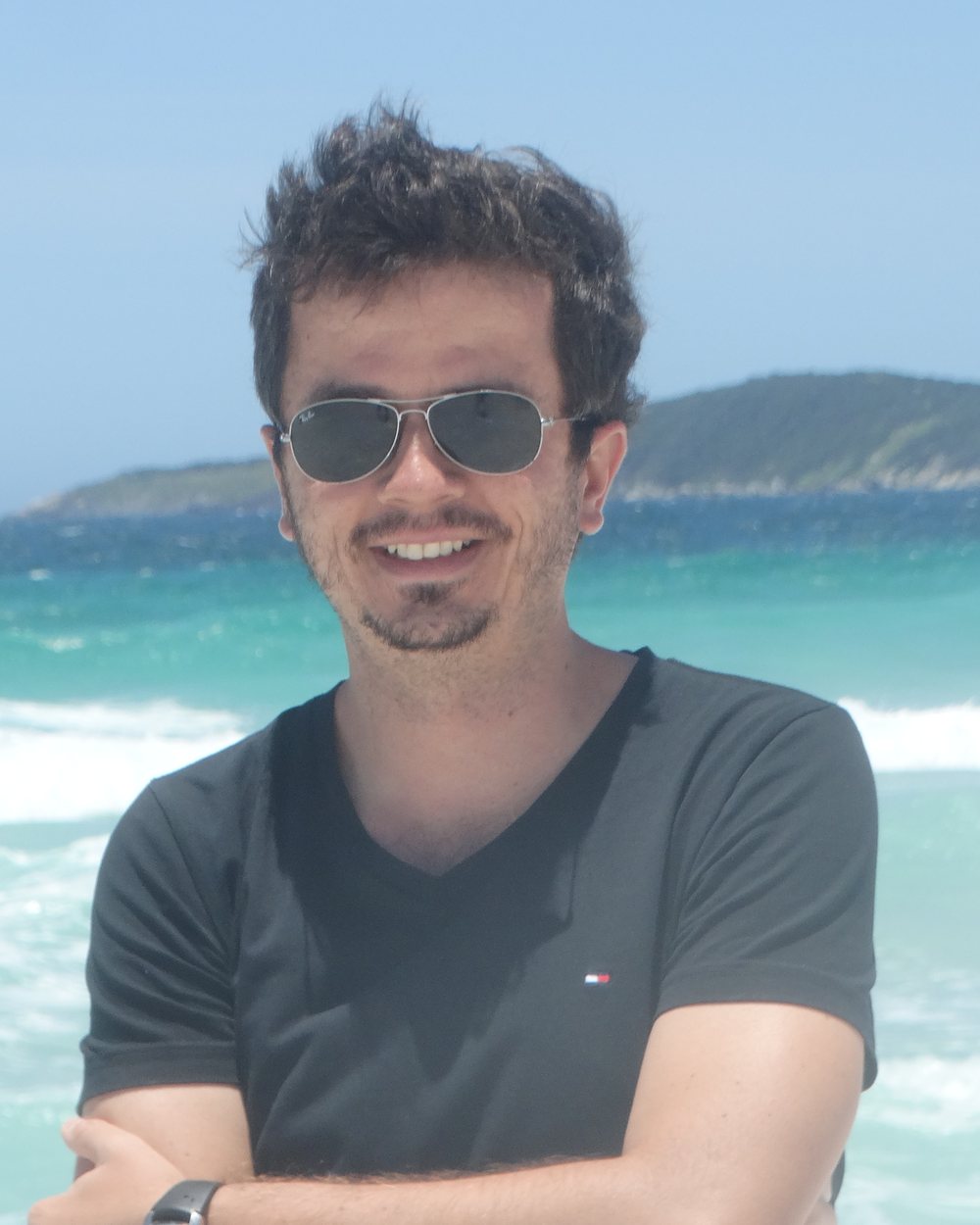
Marcos Oliveira

For 15 years I built the electronics that decide, in millionths of a second, which particle collisions at CERN are worth keeping. Now I design chips for AI.

ASIC designer at Netpreme, working on AI-native memory systems. Before that, FPGA engineer and team lead on the trigger of the ATLAS experiment.

What I do now

After 15 years in publicly funded research, I moved to industry. At Netpreme I work on ASIC design for AI-native memory systems.

What came before

  • Trigger electronics at CERNFifteen years on the first-level trigger of the ATLAS experiment: the Central Trigger Processor, its muon interface, the Liquid Argon calorimeter and the Global Trigger multiplexer.
  • Architecture and team leadershipSystem and firmware architect with Brookhaven National Laboratory, and lead of a firmware team working in high-level synthesis.
  • TelecommunicationsWhere it started, in Brazil: OFDM systems and the first Latin American power-line communication modem.

From Três Rios to Geneva, and on to silicon

20 years of study and work, drawn the way I look at signals all day. Studies and jobs ran in parallel for most of it.

The copper cursor marks today.

I grew up in Três Rios, in the state of Rio de Janeiro, and went to school on a scholarship.

In Juiz de Fora I attended high school in the morning and a technical course in electrical engineering at night, walking 8 to 10 km a day to save on bus tickets. At university I did not miss a class. I knew the chance was a rare one.

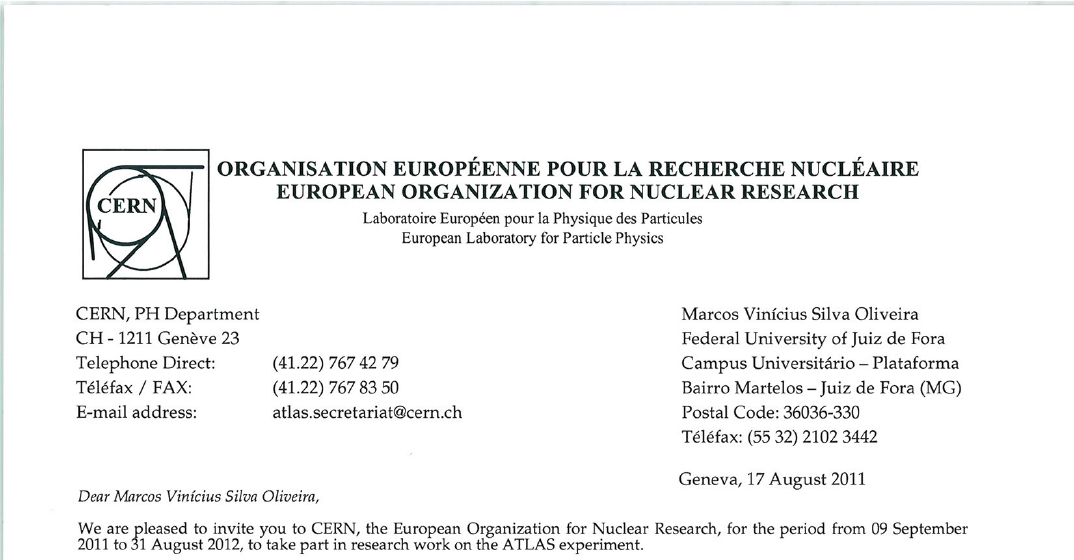
At 23, while finishing my degree, I was invited to CERN for one year. It was my first flight and my first time outside Brazil. In my first meetings I understood about five words in two hours.

Top of the invitation letter from CERN, dated Geneva, 17 August 2011
The invitation letter, August 2011.

I stayed for 15 years. While working on the ATLAS trigger I completed a master's at UFJF and a PhD at EPFL, and came to supervise students of my own.

Then I left the public sector for the private one. I now work at Netpreme on ASIC design for AI-native memory systems.

  • ASIC design, AI-native memory systemsNetpreme
  • Physics Associate, Electronic EngineerBNL Omega Group, stationed at CERN
  • Senior Fellow, Electronic EngineerATLAS Liquid Argon calorimeter, CERN
  • Electronic EngineerATLAS Level-1 Central Trigger Processor, CERN
  • R&D, power line communication modemUFJF. FPGA blocks for the physical layer of the first Latin American PLC modem

Three theses

Each one in two versions. Pick the one you want to read.

2016–2021PhD, EPFL

Low-Latency High-Bandwidth Circuit and System Design for Trigger Systems in High Energy Physics

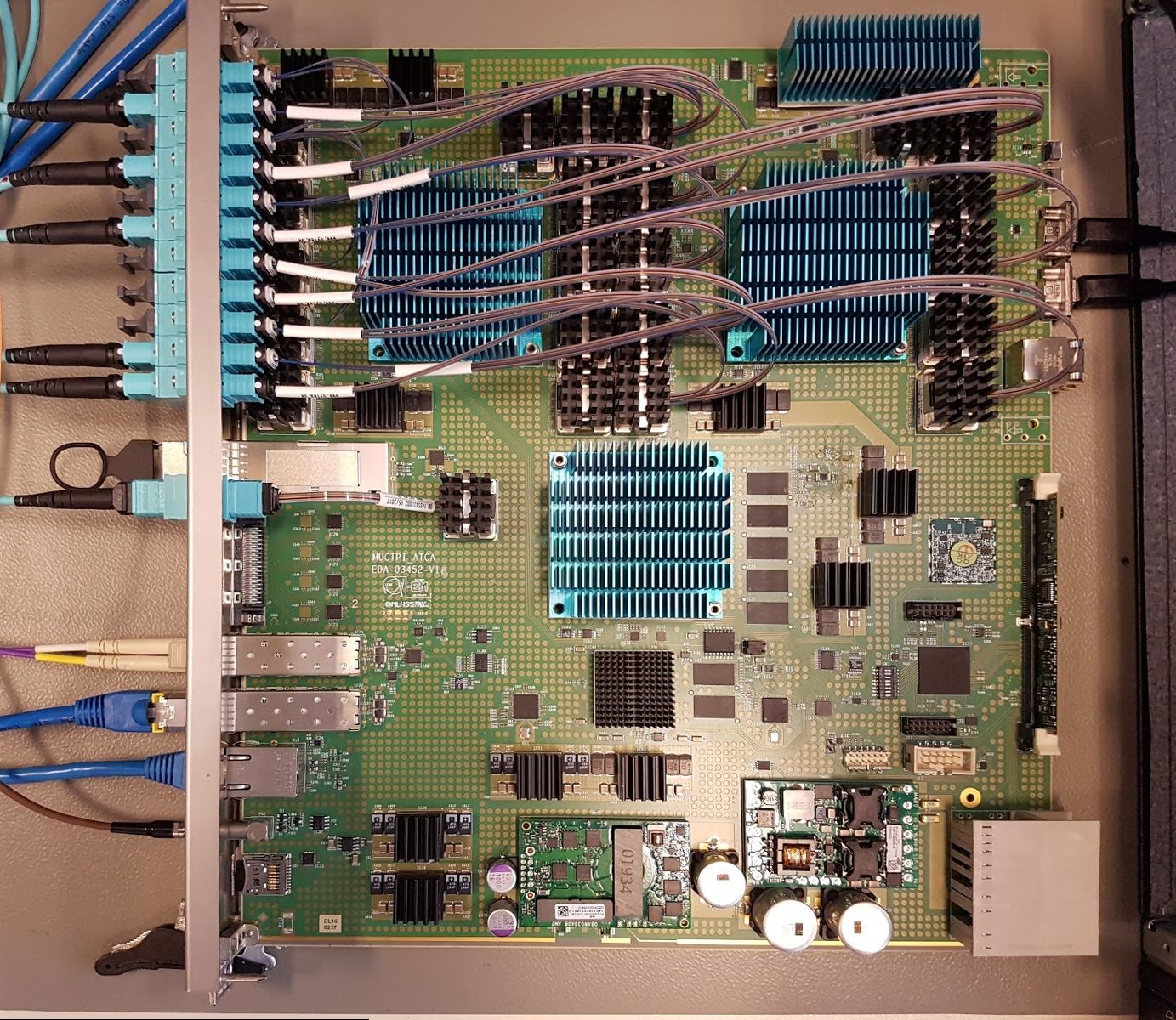
I designed the prototype of a new muon processor for ATLAS and invented a way of sorting fast enough for it: 352 items in 31.25 nanoseconds, about 12 million times faster than the blink of an eye.

Low-latency, fixed-latency synchronisation of 208 high-speed serial inputs, bit-error-rate qualification of every link at 12.8 Gb/s, and a 352-input sorting network implemented in both RTL and high-level synthesis with a latency of 31.25 ns.

Defended before a jury chaired by Prof. Giovanni De Micheli. Among the examiners was Prof. Sherenaz Al-Haj Baddar, author of the fastest known 22-key sorting network, from which my 352-key network is built.

The MUCTPI prototype board with FPGAs under heat sinks and optical fibre ribbons
The muon processor prototype (MUCTPI) on the test bench.
2012–2015Master, UFJF

The ATLAS Level-1 Muon Topological Trigger Information for Run 2 of the LHC

I upgraded the muon electronics of ATLAS so that the experiment could use the position of each muon when choosing which collisions have the most potential for science.

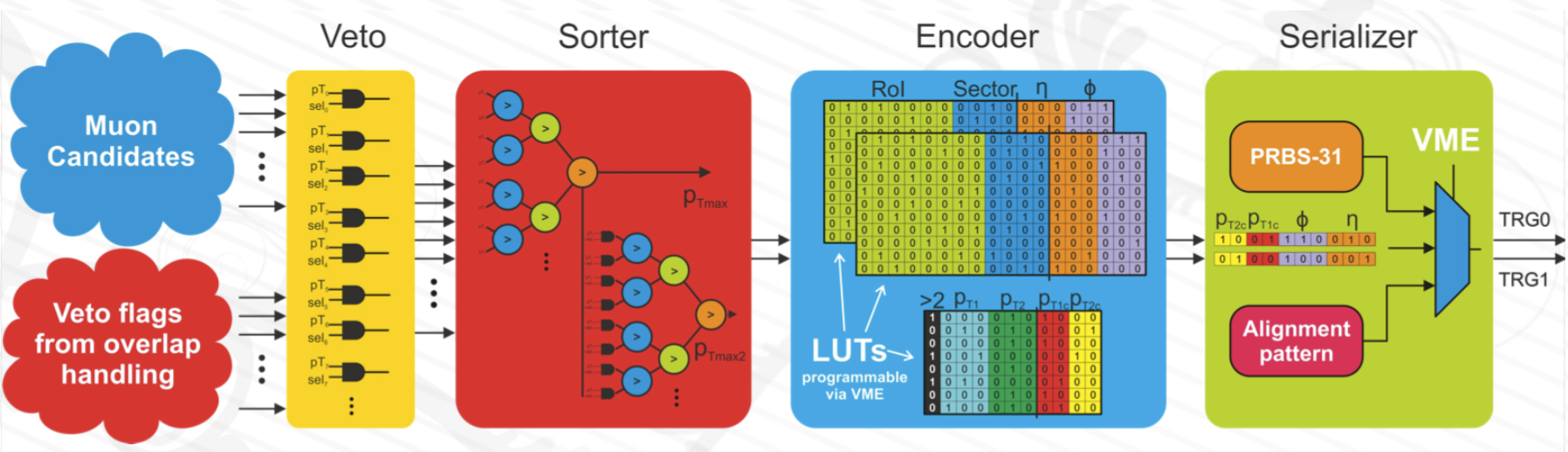
Firmware upgrade of the ATLAS Muon-to-Central-Trigger-Processor Interface (MUCTPI): sorting, encoding and serialising the two highest-momentum muon candidates per sector at 320 Mb/s over outputs never meant for it, validated with phase scans and bit-error-rate tests.

Block diagram: muon candidates pass through veto, sorter, encoder and serializer stages
The logic added to the muon interface: veto, sorter, encoder, serialiser.
2006–2011Bachelor, UFJF

Timing Synchronization Techniques for OFDM Systems

Before a digital receiver can read anything, it has to find exactly where each block of data begins. I compared techniques for doing that, proposed a cheaper one, and built them in hardware.

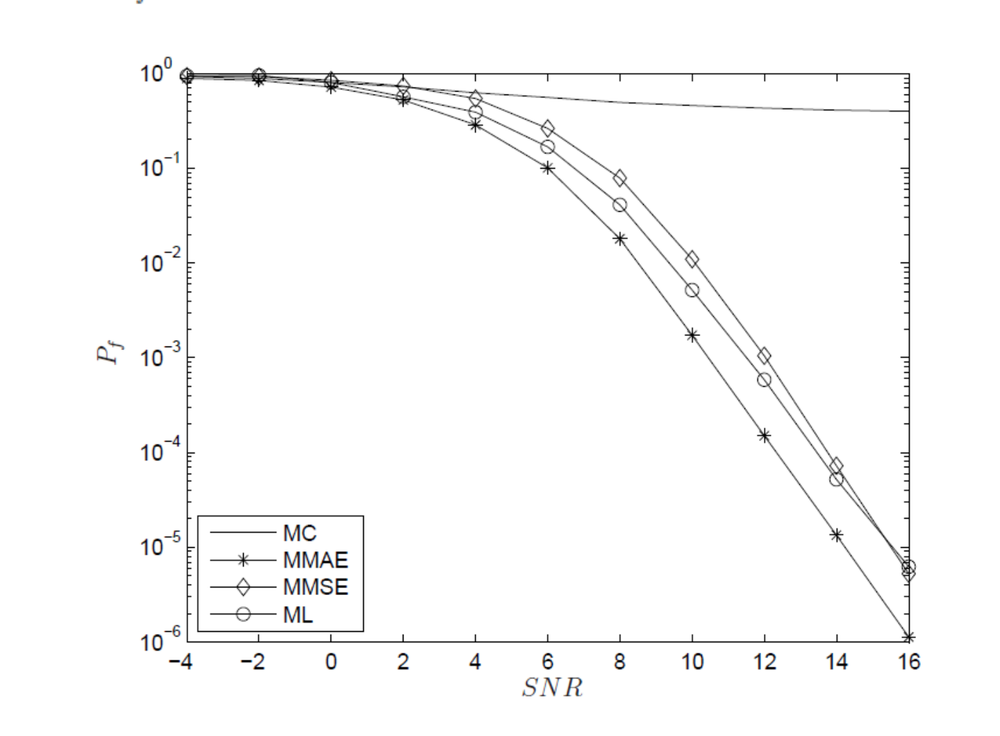
Comparison of preamble- and cyclic-prefix-based timing estimators for OFDM, a proposed low-complexity estimator (MMAE) for real-valued HS-OFDM, and recursive FPGA implementations of all of them.

Simulation plot: error probability falling with signal-to-noise ratio for four estimators
Simulated error probability of the four estimators against signal-to-noise ratio.

Selected publications

Citations
266,135
h-index
230
i10-index
980
Papers on INSPIRE
791

Citation figures from Google Scholar, November 2026. They include the papers I sign as a member of the ATLAS Collaboration.

  1. The Muon to Central Trigger Processor Interface for the Upgrade of the ATLAS Muon Trigger for Run-3Topical Workshop on Electronics for Particle Physics (TWEPP). Primary author
  2. The ATLAS Muon to Central Trigger Processor Interface Upgrade for the Run 3 of the LHCIEEE Nuclear Science Symposium and Medical Imaging Conference. Primary author
  3. The ATLAS Level-1 Muon Topological Trigger Information for Run 2 of the LHCJournal of Instrumentation, JINST 10 C02027. Primary author
  4. Upgrade of the ATLAS Central Trigger for LHC Run 2Journal of Instrumentation, JINST 10 C02030
  5. A Low-Cost Implementation of High Order Square M-QAM Detection/Demodulation in a FPGA DeviceInternational Telecommunications Symposium (ITS), Manaus. Power-line communication

Google ScholarORCIDFull list on INSPIRE

Teaching and mentoring

I have supervised master's and PhD students from UFJF (Brazil), ETH (Switzerland), NYU (United Arab Emirates), USAC (Guatemala) and Padova (Italy). They now hold positions in research labs and in industry.

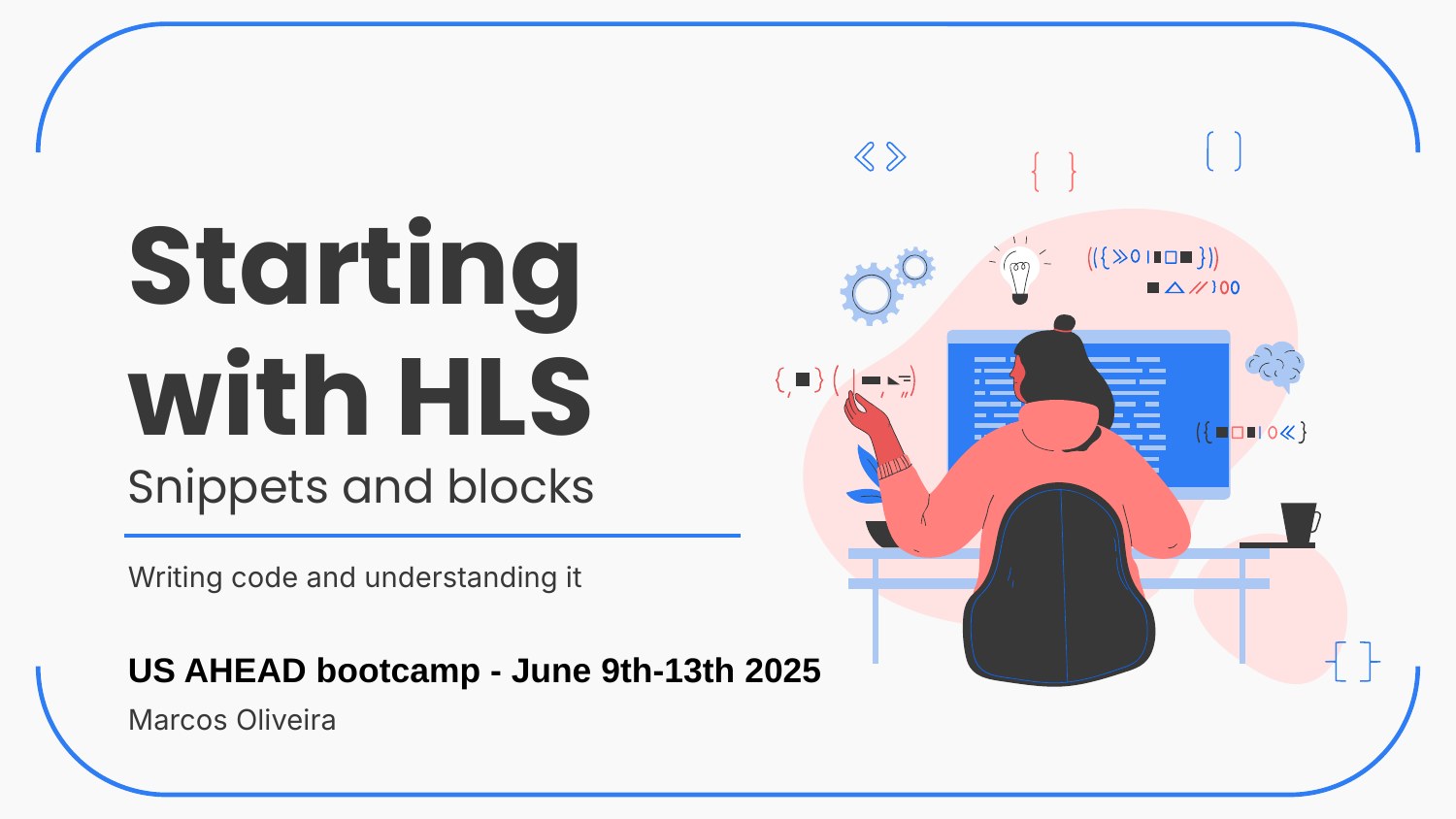
In June 2025 I taught Starting with HLS at the US AHEAD bootcamp, an introduction to writing hardware in C++. Slides (PDF)

Title slide of Starting with HLS, US AHEAD bootcamp, June 2025
Opening slide of Starting with HLS, US AHEAD bootcamp, June 2025.

In 2011 I wrote and taught a basic Verilog course, focused on synthesisable code, for the power-line modem team at UFJF. Slides (PDF, in Portuguese)

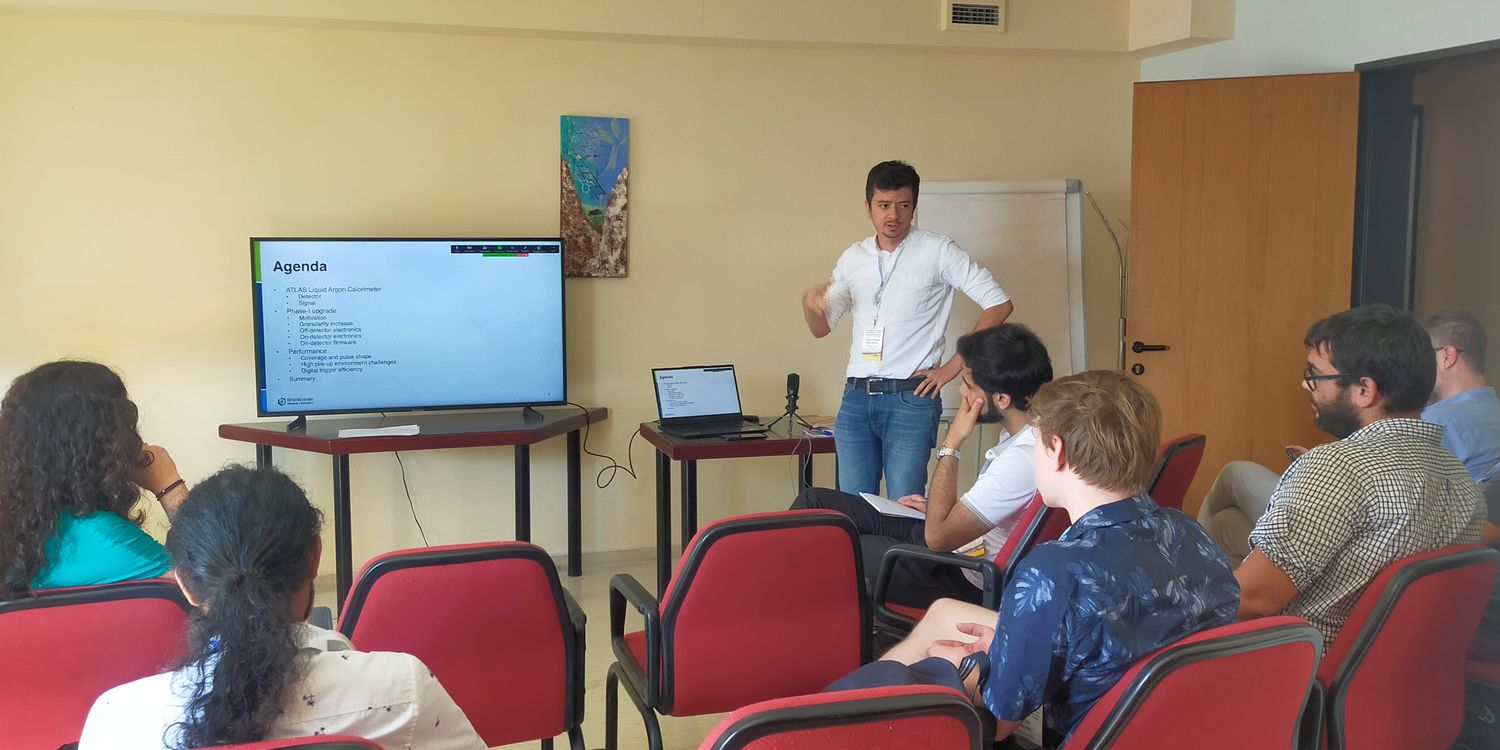
Marcos teaching a small group in a seminar room
A seminar on the ATLAS Liquid Argon calorimeter electronics.

Notes from 15 years of trigger electronics

One post per problem I worked on, with the details I wish I had found written down. Posts are in English. Twelve are written; one is planned.

  1. Building the first Latin American power-line modemFirmware
  2. Teaching a trigger where the muons areFirmware
  3. Synchronising more than 100 serial links in one FPGAFirmware
  4. Making transceiver latency deterministicFirmware
  5. Checking PCB schematics with a script: PCBpyHardware
  6. Testing 300 transceivers without touching them: IBERTpyTools
  7. Sorting networks in RTL and in HLS: SNpyFirmware
  8. Measuring and reducing latency uncertaintySystems
  9. Timing distribution for the High-Luminosity LHCSystems
  10. High-level synthesis in production: calorimeter firmwareFirmware
  11. Talking between FPGAs on the same boardFirmware
  12. Starting with HLS: from a logic gate to a FIR filterTeaching
  13. Architecting the Global Trigger multiplexerSystems
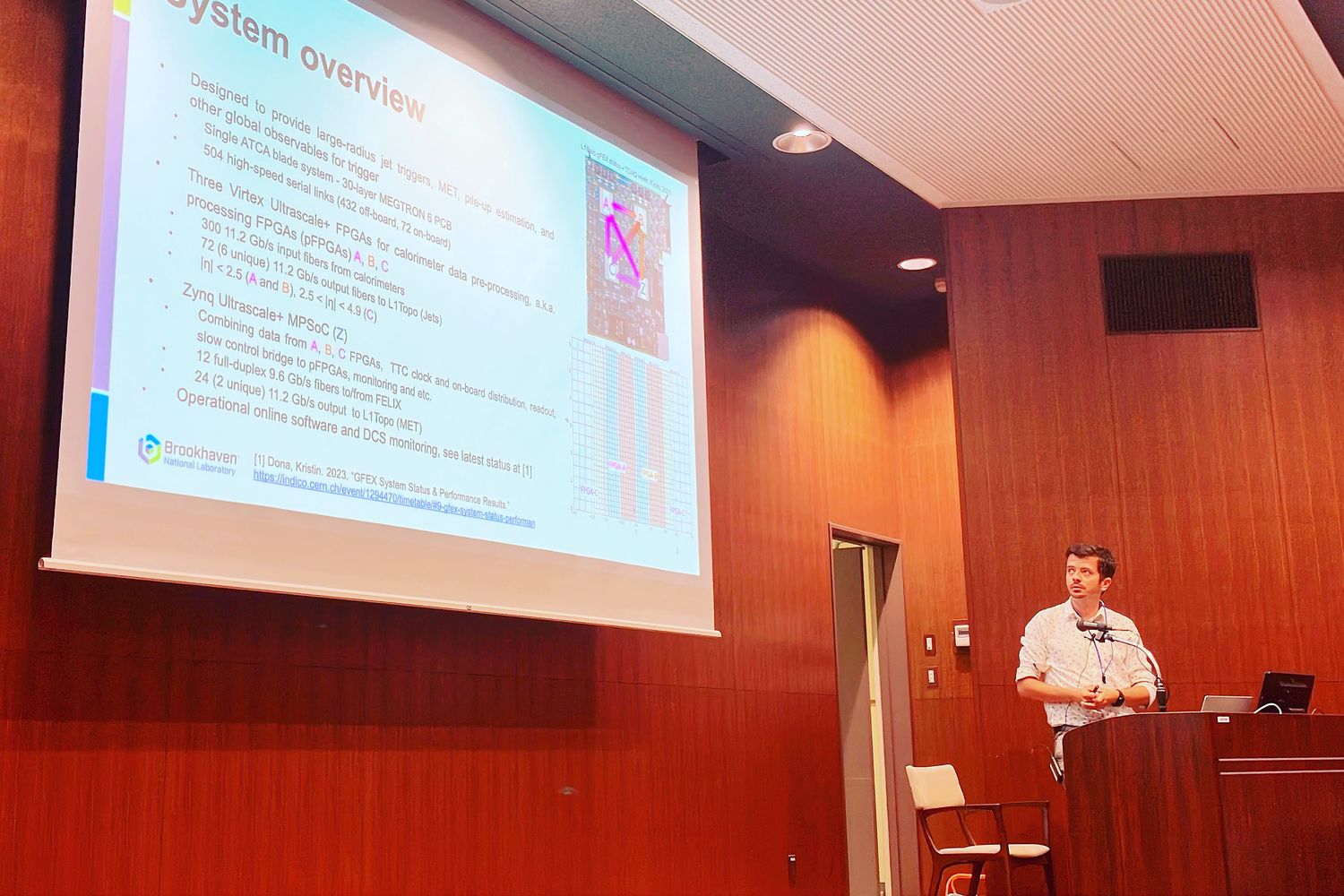
Marcos presenting a slide titled System overview in an auditorium
Presenting trigger electronics at a collaboration meeting.

Outside work

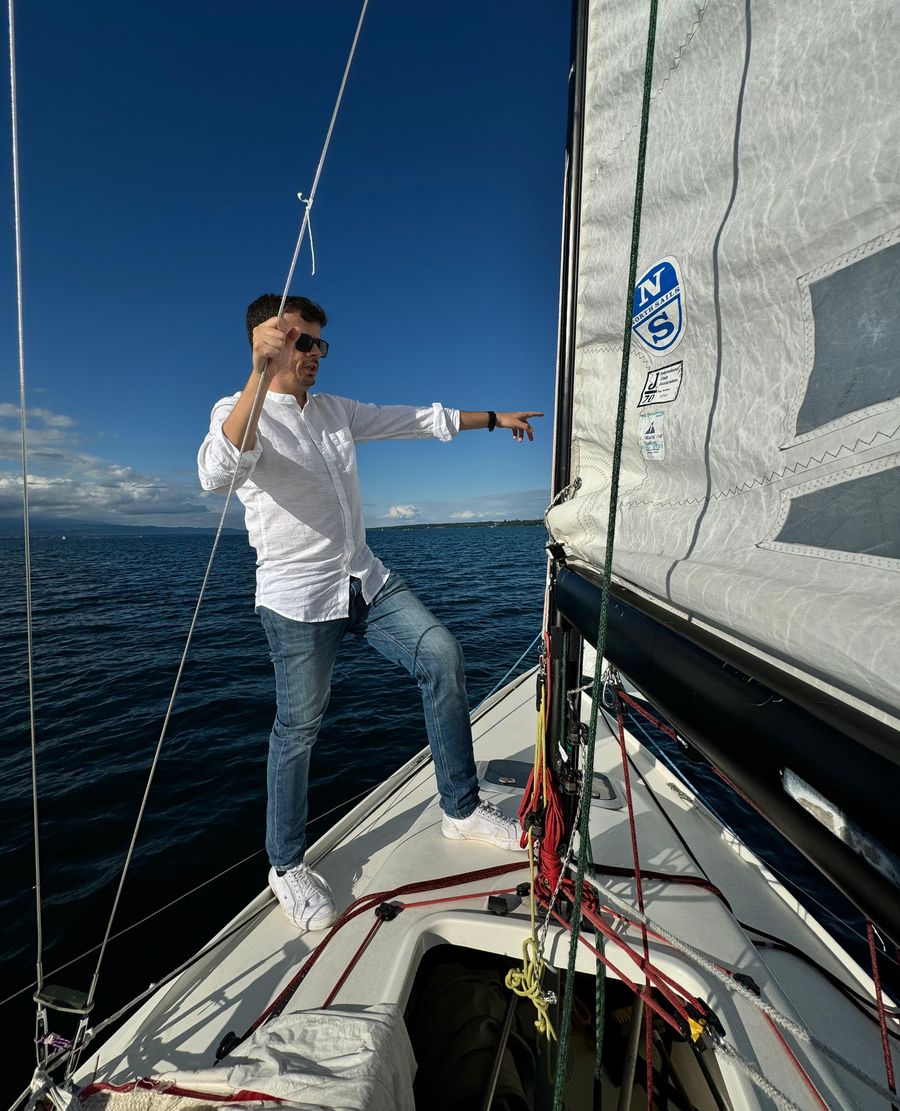
Sailing

I sailed for the first time after moving to Geneva, and kept going: twelve years with the Yachting Club CERN, from courses on the lake to four club cruises. Read the story and see the cruise maps

Marcos standing on the bow of a sailing boat

Genealogy research

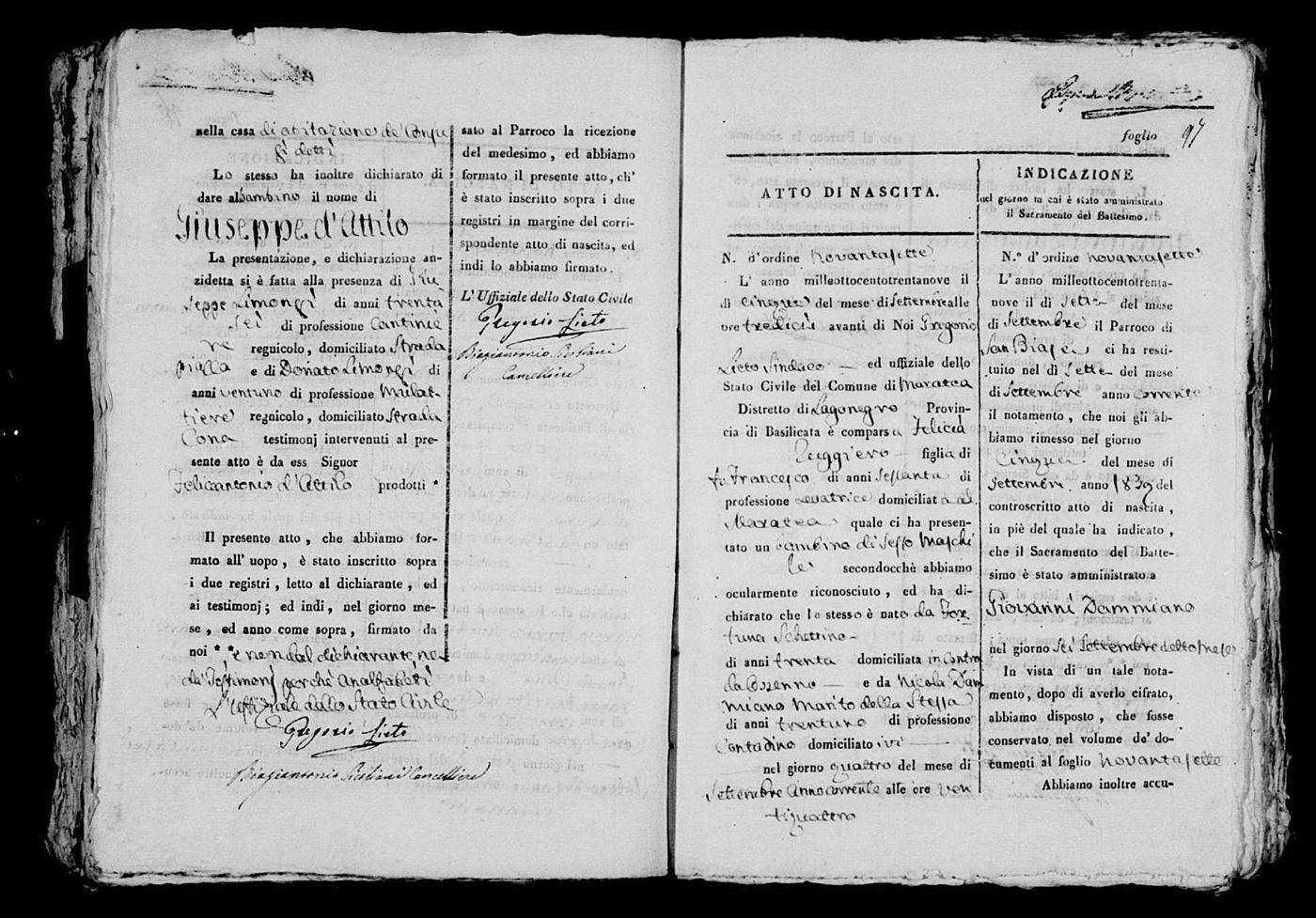
I wanted to know more about my family and ended up driving from town to town in the state of Rio de Janeiro and reading Italian parish and civil registers page by page. Read the story and explore the tree

Handwritten Italian civil record from Maratea, 1839

Music

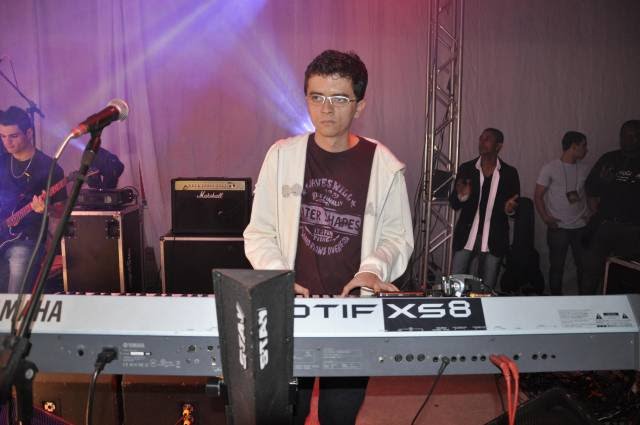
I learned my first chords at fourteen from a sheet a friend wrote by hand, and kept playing: Methodist churches in Brazil and Switzerland, and today the worship team at Hillsong Geneva. Read the story and play the chord sheet

Marcos playing a keyboard on stage